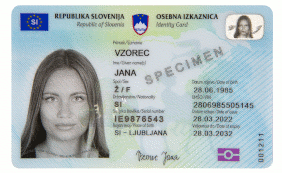
Ljubljana, 15 September – A revised government regulation on electronic identification has introduced important simplifications for using Slovenia’s e-services. The key innovation is a virtual high-level identification method, where the physical ID card is required only during the initial setup.
With this change, users can now log in to e-services using the updated eOsebna mobile application, without the need to repeatedly scan their ID card on a phone or use a smart card reader.
According to the Ministry for Digital Transformation, this upgrade will make access to public e-services such as eUprava, eDavki, and ZZZS safer, faster, and easier—directly from a mobile phone. The Ministry expects this to significantly increase the use of digital services across the public sector.
Additional improvements introduced by the regulation include:
Ordering a PUK code through the mobile app, previously only possible at an administrative unit.
Mandatory training for officials who perform user identification during the issuance process.
Expansion of institutions authorized to issue mobile identity smsPASS. In addition to administrative units and consular offices, issuance is now possible at the Financial Administration (FURS), the Employment Service of Slovenia (ZRSZ), and directly through the provider of e-identification services.
This development marks another step forward in Slovenia’s digital transformation strategy, aiming to streamline administrative procedures and make state services more accessible to citizens and businesses.
At SIBIZ, we follow regulatory and digital changes closely, since they directly affect how companies and individuals manage their business and personal matters in Slovenia. We support and advise foreigners, private individuals, entrepreneurs, and corporations in navigating these updates. Our team is specialized in helping international clients adapt smoothly to Slovenian legal, tax, and digital requirements, ensuring compliance and efficiency in both business and personal processes.
For more information or tailored support, contact us at www.sibiz.eu
Get consultations and important information first hand!
Slovenia is on the brink of significant legal reforms affecting how foreign professionals and third-country nationals enter, reside, and work in the country. Two major legislative proposals—the draft amendment to the Foreigners Act (ZTuj) and the draft amendment to the Employment, Self-Employment and Work of Foreigners Act (ZZSDT)—have ignited an intense public debate among key […]
The Ministry of Economy, Labour and Sport (Ministrstvo za gospodarstvo, delo in šport) has officially published the draft amendments to the Employment, Self-Employment and Work of Aliens Act (ZZSDT) on the e-Demokracija public portal. This comprehensive legislative revision brings Slovenian labour regulations into line with Directive (EU) 2024/1233 (the recast Single Permit Directive). The proposed […]
Starting January 1, 2028, a major shift will transform the way business-to-business (B2B) transactions are handled in Slovenia: the mandatory exchange of electronic invoices. This change is mandated by the new Law on the Exchange of Electronic Invoices and Other Electronic Documents (ZIERDED). For foreign founders, expats running local businesses, and corporate managers overseeing operations […]